Does eating red and processed meat increase your risk of developing cancer?
You may have seen news stories about the links between red and processed meat and cancer. This is because eating processed meats or having a diet high in red meat is a cause of bowel cancer. These meats can also be high in calories and fat, which can contribute to weight gain.
> Our Recommendation is to limit red meat and avoid processed meat – find out how
Red meat refers to all types of meat from mammals, such as beef, veal, pork, lamb, mutton, horse and goat. This includes foods like steak, minced beef, pork chops and roast lamb.
Red meat is a good source of nutrients so can form part of a healthy, balanced diet, but we don’t need to eat it every day. Aim for no more than about three portions a week, which is about 350–500g cooked weight (or 525–750g raw weight) a week. A medium steak is about 145g (cooked weight) and 3 slices of roast beef or pork is about 90g (cooked weight).
There isn’t enough evidence about other red-coloured meats, including game – like quail and venison – for us to say whether they affect cancer risk, so we don’t make specific recommendations about these. If you do eat red meat, cutting down can help protect against bowel cancer.
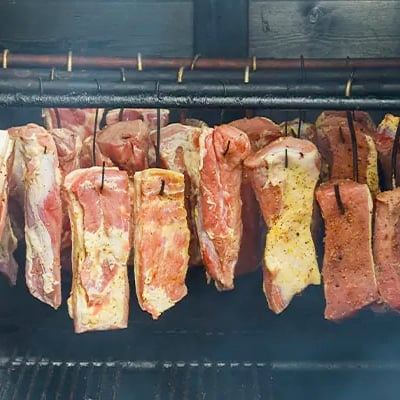
Processed meat has been smoked, cured or had salt or chemical preservatives added rather than having just been cooked or reformed (like most sausages and burgers). This includes bacon, salami, chorizo, corned beef, pepperoni, pastrami, hot dogs and all types of ham.
We recommend eating very little, if any, processed meat because there is strong evidence that it is a cause of bowel cancer and can be high in fat and salt. If you eat meat, it’s best to choose unprocessed meat.
Researchers are still investigating how red meat causes cancer. One possible way involves a compound called haem, which contains iron and gives red meat its colour. Haem can trigger the formation of cancer causing compounds which have been shown to damage the lining of the bowel, which may cause bowel cancer.
Processed meat, as well as predominately being made from red meat, contains added nitrites and nitrates, which can also be digested to form compounds that are thought to cause cancer.
| Age group | Grams of red and processed meat eaten by UK adults per day1 | |
|---|---|---|
| Men | Women | |
| 19–64 | 77 | 47 |
| 65 and over | 70 | 49 |
1 Statistics on red and processed meat come from the National Diet and Nutrition Survey results from Years 7 and 8 (combined) of the Rolling Programme (2014/2015 – 2015/2016).